|
Signal and Power over one Cable™
- Remote power. No batteries. No power wires.
- Designer audio circuits. High-current. Patented.

|
Overdrive by David Barber
- Classic overdrive tone
- Boostable Bypass prevents tone-suck
- 4th knob for boost
- P3 Ready™
- Runs on P3. Passes P3.
- Can power stock pedals.
- Can use 9-volt battery.
|
|
|

|
Delay by Andy Fuchs
- Short, medium, long delay possible
- Uses standard BB chip
- Blue/red power/overload indicator
- P3 Ready™
- Runs on P3. Passes P3.
- Can power stock pedals.
- Can use 9-volt battery.
|
|
|
|
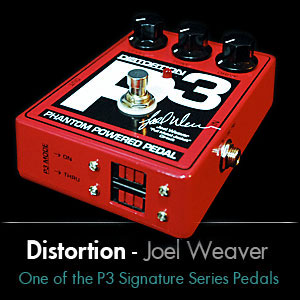
Distortion by Joel Weaver (HBE)
- Beyond extreme distortion possible
- Very hot gain
- Full bodied without flub
- P3 Ready™
- Runs on P3. Passes P3.
- Can power stock pedals.
- Can use 9-volt battery.
|
|
|
|
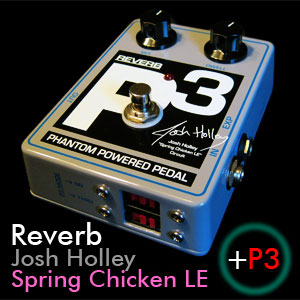
Reverb by Josh Holley (Spring Chicken LE)
- Classic spring chicken reverb response
- "Cluck" dwell and wet/dry mix
- Expression pedal jack
- P3 Ready™
- Runs on P3. Passes P3.
- Can power stock pedals.
- Can use 9-volt battery.
|
|
|
|
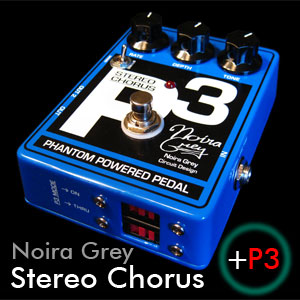
Stereo Chorus by Noira Grey
- 'Cult-favorite' chorus circuit
- Go from subtly lush, to radical wobbling Leslie-like tones
- Mono or stereo operation
- P3 Ready™
- Runs on P3. Passes P3.
- Can power stock pedals.
- Can use 9-volt battery.
|
|
|
|
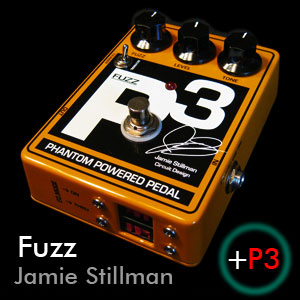
Fuzz by Jamie Stillman
- Circuitry designed by Jamie Stillman, mastermind of EarthQuaker Devices
- Killer fuzz pedal with great dynamics and harmonic content
- Touch-sensitivity
- "Thunder" switch for fatter low-end beef
- P3 Ready™
- Runs on P3. Passes P3.
- Can power stock pedals.
- Can use 9-volt battery.
|
|
|

|
MIX-3 Delay by Jason Robling
- Triple independently-knobbed wet/dry mixes
- Tap-tempo external footswitch included
- Foot tap overrides knob tempo
- Short, medium, long delays possible
- P3 Ready™
- Runs on P3. Passes P3.
- Can power stock pedals.
- Can use 9-volt battery.
|
|
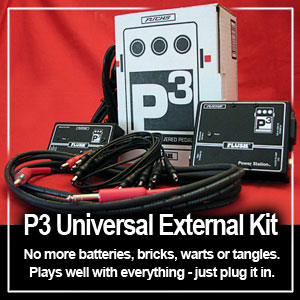
Universal P3 System, for stock pedals
"A pedal junky's best friend." - Analog War Cry
- Designed for compatibility with any amp, any pedals, any setup.
- PowerStation™ converts 90-240VAC to 9VDC at up to 1700mA.
- Supports standard TRS stereo cables.
- PowerSplitter™ provides P3 TRS and standard DC barrel jacks.
- Various cables included for special requirements.
- Regulated power supply. Quasi-isolated and filtered outputs.
- Auto-cutoff and restart prevents damage by short-circuit.
- P3 Ready™
|
|
|
|
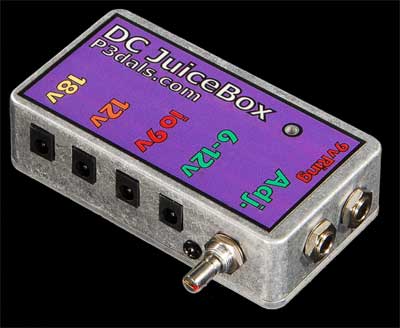
Overdrive your overdrive
You've tweaked your pedals' controls for years.
Now you can tweak their power.
- Boosts or browns headroom. A new way to explore tone.
- Super-charge them: Enliven and expand existing pedals.
- Maximize headroom, overdrive, voltage. Slam tone. Make it burn.
- Provides 12-volts, 18-volts, and anything from 6-volts to 12-volts.
- Works with any 9-volt supply. Solid. Quiet. Linearly regulated.
- A professional tool that is its own Goal - no cheap after-thoughts.
- P3 Ready™ High-current. High-power. Fixed and variable voltages.
- Capable of converting up to 30 watts of power at various voltages.
- Silvered Neutrik TRS jacks, Bourns control, military precision.
|
|
|
|
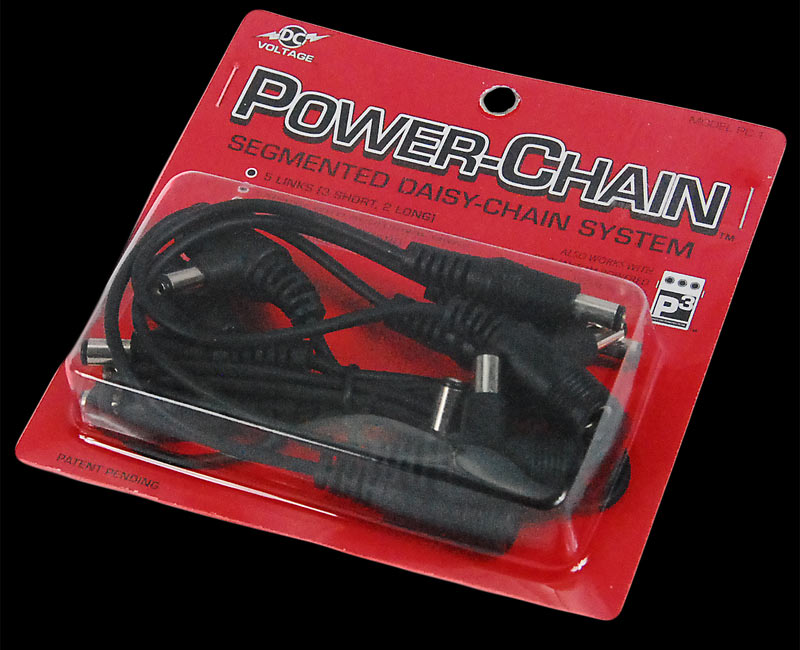
End Loose Ends
- Custom fits any pedalboard or setup
- Add or remove pedals, one by one - ultimate in configurable
- Segmented for easy, quick replacement
- No more dangling ends, no more short-circuits
- Handles high current; compatible with all standard cables, pedals
|
|
|
|
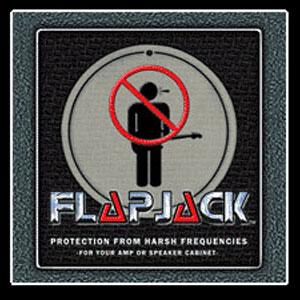
Speaker Beam Diffuser
- Cuts the harsh out, without compromising power or tone
- Soft silicone rubber disc, can not scratch
- Improves any speaker, any combo
- Attaches easily; stows quickly
- Light-weight, flexible
|
 | Copyright © 2006 - 2026 DC Voltage Company | |
|